Triple Intelligence (3IQ) | A Neuroscience-Based Path to BioPsychoEmotional Wellbeing
Created by C.E. Pritchett, PhD – neuroscientist and wellbeing specialist
Originally published October 2024; updated January 2026
I. Conceptual Overview: A Model of BioPsychoEmotional Health
Every human experience — thought, emotion, or sensation — is mediated by electrical and chemical signaling throughout our physiological systems. Through awareness, we can harness aspects of this process to enhance our physical, mental, and emotional health and wellbeing.
The Triple Intelligence model, or 3IQ, recognizes that our three major domains of intelligence operate as reciprocal and bidirectional systems. These systems are our:
- Physical Intelligence (Body): Awareness of somatic signals, nervous system state, and energetic capacity.
- Emotional Intelligence (Meaning & Purpose): The capacity to understand and integrate emotions, values, and social signals to guide purposeful, meaningful action.
- Mental Intelligence (Mind): The ability to direct attention, manage thoughts, and effectively use knowledge to problem-solve.
When synchronized, these three systems can enhance meta-cognition, decision-making, and overall health and wellbeing. This model harnesses the ancient concept of alchemy to support and assist with a state-shift (see 5a: Why “Alchemy”) towards synchronistic engagement of our three intelligent nervous systems.
The Triple Intelligence framework also reframes intelligence not as a static trait limited to cognitive ability, but in its more modern form as living, adaptive capacity of a system (see 5b: Why “Intelligence”) that can be cultivated through awareness, training, and intentional practice.
Illustrative idea: A quietly-anxious high-achiever can’t distinguish if their racing heart is due to worry, their high-pressure life, social anxiety, too little exercise, or simply not enough sleep – so they begin to avoid mental, social, and physical exertion altogether. A coherent system arises when the three intelligence systems are trained to distinguish between different bodily states, normalize benign sensations, and respond to dysregulation appropriately by engaging tools that maintain sustained ability and resilience.
II. Conceptual Overview: Triple Intelligence In Action
By restoring coherence across the body, mind, and emotional systems, individuals can unlock a deeper form of intelligence — one that supports sustained wellbeing, personal evolution, and meaningful contribution.
Coherent and synchronized Triple Intelligence, in action, includes:
Embodied decision-making: When facing a complex strategic choice, we integrate analytical reasoning with bodily signals of tension or ease and emotional cues of alignment or resistance, leading to decisions that are both rational and deeply attuned.
Emotional resilience under pressure: In an important but high-stress situation, we know how to maintain nervous system regulation, allowing empathy, clarity, and effective action to coexist with change, uncertainty and even lack of control.
Creative problem-solving: When experiencing cognitive fatigue, we can shift attention into the body through movement or breath, unlocking insight and novel solutions that analytical effort alone could not access.
Relational attunement: Subtle emotional dynamics within a relationship are noted and responses are adjusted to situations, environments and communication style accordingly, thus fostering psychological safety, trust, and collaboration and deeper relationships.
Values-based responding: In moments of major emotional activation, we are able to pause, sense, reflect, and respond from core values rather than conditioned reaction, thus strengthening integrity and self-leadership.
Section References: Albarracín et al, 2024; Craig, 2002; Damasio, 1996; Dweck & Yeager, 2019; Feldman, 2020; Grossmann & Johnson, 2025; Lindquist et al, 2012; Yavuz Sercekman, 2024
1. Introducing the Science of BioPsychoEmotional Health and Emergence of the Three Intelligences
At the neurobiological level, thoughts, emotions, and sensations are generated through electrical and chemical signaling in the nervous system, within and across large-scale subcortical, cortical, and extracortical networks. Applied Triple Intelligence helps individuals become aware of, influence, and realign these patterns so that less energy is spent on chronic stress or reactionary behaviors and more is available for acts of creativity, connection, and meaning.
In the era of information overload and amid reports of rising stress and burnout, awareness of and responsibility for one’s attention — when, on what, and how we engage our selective concentration — becomes increasingly important. Where we place our attention influences the way our nervous system communicates; where we place our attention habitually leads to enduring connections that influence multiple areas of our life.
The Triple Intelligences (3IQ) describe the biological, psychological and emotional (BioPsychoEmotional) process of aligning one’s body, mind, and emotions for optimal wellbeing, personal growth, and high performance across time. This alignment is supported by harnessing the power of awareness and our knowledge of the human physical, mental and emotional systems. Understanding these systems within ourselves and applying sustainable practices backed in both science and time-honored traditions leads to long-term growth—when led by intention. To do this, we need to turn our focus to the three intelligent (nervous) systems within us.
Illustrative idea: A person under chronic stress might feel “stuck in their head,” disconnected from their body, and emotionally reactive. 3IQ supports them with tools to re-engage the body, quiet unhelpful mental loops, and respond from values rather than fear.
When we consider evidence from neuroscience, psychology, cognitive behavioral science, and human physiology, a clear picture emerges: the mind and mental space that dominates our attention is but one of an intricate and complex set of intelligent systems across which we can spread our attentional resources, to our benefit. Along with the mind, which includes aspects of what we have traditionally considered ‘intelligence’ in the form of an IQ score (or similar measures), we each carry a nervous system that is dedicated to our physical body and sensations (within and without) and another that is described in this model as part of our emotional regulation system. These nervous systems work together in a sophisticated and fluid dance to create the unique reality that each individual perceives as the world around them.
The upcoming sections outline each intelligence system and the science behind each one.
2. Physical Intelligence (Body)
Physical Intelligence refers to our capacity to accurately sense, understand, and regulate the body’s internal state. It includes interoception, autonomic arousal, muscular tension, breathing, and overall energetic capacity. Within the Triple Intelligence model, it is most closely aligned with the peripheral nervous system (except for the autonomic nervous system*).
Neuroimaging and psychophysiological studies show that regularly practicing interoceptive awareness (such as in the application of Nervous System Alchemy, see Section 5) reshapes functional connectivity in networks linking insula, anterior cingulate, and prefrontal regions (e.g. Sugawara, 2020). These areas are central hubs for integrating bodily signals into conscious appraisal and behavior—meaning they influence the choices that we make and the actions that we take. Changes in connectivity within them are now understood as manifestations of experience-dependent neuroplasticity: repeated, intentional attention to bodily signals strengthens synaptic pathways that support more precise, less reactive representations of internal states, thereby expanding the range of adaptive responses available, even under stress.
Simply put, the behaviors we engage in habitually shape how we think, feel, and react over time —they matter!
Through repetition, greater awareness and regulation of bodily signals are associated with a more flexible autonomic profile — characterized by higher parasympathetic activity relative to chronic sympathetic arousal — which in turn relates to better emotion regulation, lower anxiety, and healthier behavioral patterns (e.g. Pinna, 2020; Ueno, 2023). In positive psychology terms, this bodily attunement can be framed as a foundational “resource” that underpins self-regulation, resilience, and vitality, enabling people to respond to challenges from a state of grounded presence rather than chronic threat. This resource occurs through distinguishing between internal and external signals and sensations (e.g. feeling hot due to stress versus room temperature) and successfully understanding, regulating and maintaining balance.
By cultivating physical intelligence, individuals build a physiological platform on which higher-order cognitive skills and resilience can operate more efficiently, supporting clearer meta-cognition and wiser decision-making in everyday life, plus greater overall physical health.
Illustrative idea: A high-achieving professional lives with tight shoulders, shallow breathing, and constant fatigue but dismisses it as “just busy.” Physical Intelligence helps them tune into early signals of overload, use tactics to downshift arousal, and build a sustainable rhythm of work and rest instead of loss of performance or burnout.
In the Triple Intelligence Model, and its applied form of Nervous System Alchemy, simple habits are used to engage our internal sensory state for improved health and wellbeing through understanding and activating our physical intelligence.
* Compared to traditional definitions which include the autonomic system as part of the peripheral system, one key difference in the Triple Intelligence model is that the autonomic system is considered separately as a bridge between the systems associated with mind and body, central and peripheral respectively – this will be discussed in detail in later sections.
Section References: Albarracín et al, 2024; Craig, 2002; Cassilhas et al., 2016; de Sousa Fernandes et al., 2020; Feldman, 2020; Gomutbutra et al., 2020; Innocenti, 2022; Martin et al, 2025; Menon, 2024; Pérez-Peña et al, 2022; Price & Duman, 2020; Sugawara et al., 2020
3. Mental Intelligence (Mind)
Mental Intelligence centers on our ability to direct and sustain attention, monitor and shape one’s own thinking, and solve problems with clarity. It includes attention, flow state, logic and reasoning, decision-making, creativity, traditional intelligence/IQ*, and innovation. In the Triple Intelligence Model, it is most closely aligned with the central nervous system (the brain and spinal cord).
In order to master our mental space, Neural Alchemy has adapted mindfulness-based interventions and related meditation practices linked to structural and functional changes in brain regions involved in attention, executive control, and self-referential processing—including parts of the prefrontal cortex, anterior cingulate cortex, insula, and default-mode network (e.g. Calderone 2024). These findings suggest that sustained practice can alter neural pathways of attentional stability, meta-cognitive processing and monitoring. The changes can occur alongside improvements in one’s working memory, cognitive flexibility, and attentional control; all of which are central components of Mental Intelligence.
From a positive psychology perspective, mindfulness-related cognitive shifts support adaptive capacities such as cognitive reappraisal — the ability to reinterpret stressful situations in less threatening ways — which facilitates realistic optimism and meaning-making amid difficulty. Mindfulness-based interventions have been shown to reduce maladaptive rumination and rigid negative thinking patterns while enhancing the ability to observe thoughts as transient mental events rather than facts, a core metacognitive skill.
Illustrative idea: A leader in a pattern of constant multitasking eventually finds their thoughts racing, struggling to focus long enough to think strategically. Mental Intelligence provides the tools to anchor attention, notice when the mind fragments, and deliberately return to the prioritized task; thus enabling clear, values-aligned decisions.
When Mental Intelligence is cultivated, one becomes better equipped to step back from automatic cognitive biases, integrate multiple perspectives, and select more constructive responses. In this way, Mental Intelligence moves us from patterns of reactivity to responsiveness.
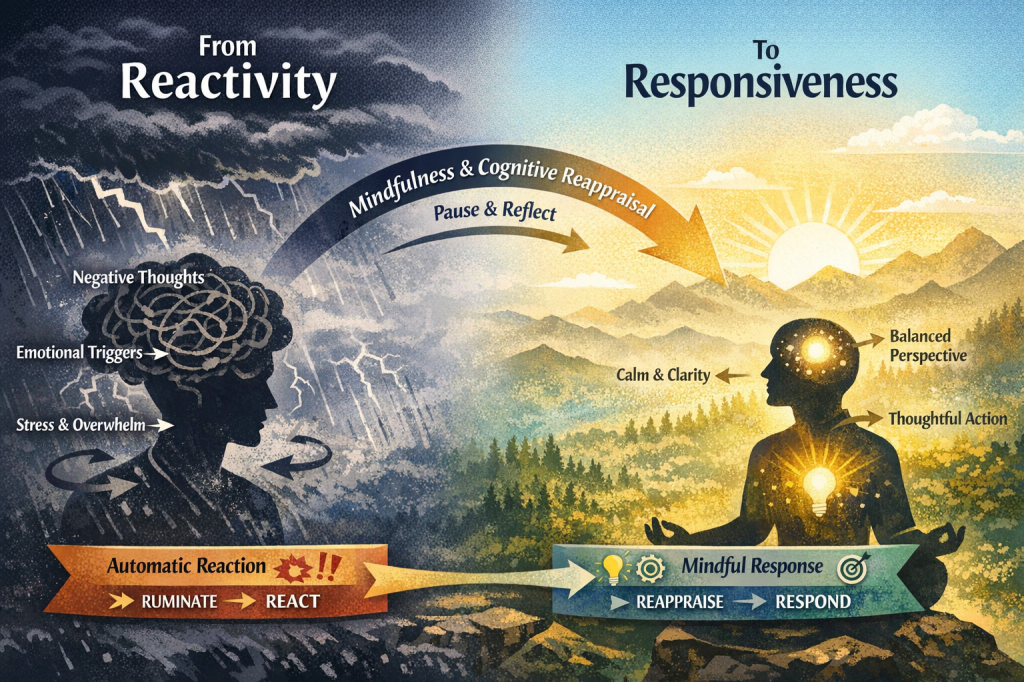
3.1 From Reactivity to Responsiveness
(Image is property of the author. Please see and reference this article at the end of this article.)
*Mental Intelligence is not synonymous with traditional IQ, the Intelligence Quotient.
The Intelligence Quotient, or ‘traditional IQ’ is defined through a standardized score considered to measure one’s cognitive abilities, such as logic, memory, and processing speed, as relative to one’s age group. Though IQ as defined by its traditional measurements includes aspects of Mental Intelligence, one’s IQ scores do not always directly impact one’s Mental Intelligence as defined with the Triple Intelligence model.
The author also acknowledges there are a variety of ongoing concerns within the academic and educational communities regarding the use of such scores and thus wishes to clarify the important distinction that IQ is under the umbrella of Mental Intelligence simply because the cognitive aspects it purports to measure (logic, memory) are a part of this branch of our intelligences.
However, Mental Intelligence is distinct from the concept of a standardized IQ score.
Section References: Albarracín et al, 2024; Craig, 2002; Cassilhas et al., 2016; de Sousa Fernandes et al., 2020; Feldman, 2020; Gomutbutra et al., 2020; Innocenti, 2022; Martin et al, 2025; Menon, 2024; Pérez-Peña et al, 2022; Price & Duman, 2020; Sugawara et al., 2020
4. Emotional Intelligence (Meaning & Purpose)
Emotional Intelligence (EQ) is a widely-recognized psychological concept that involves recognizing, understanding, and integrating emotions and values — both one’s own and those of others — to guide personally-purposeful yet socially-attuned action through a process of non-judgmental awareness, compassionate discernment, emotional neutrality, and value-based thoughts, beliefs, and actions. In the Neural Alchemy model, it is most closely associated with the Autonomic Nervous System*—the bridge between the Peripheral and Central Nervous Systems, joining the intelligences of the Mind and Body to create one’s experience of life through collaboration and coherence. Bringing awareness to each of these intelligences, and then bringing them into balance, creates longer-lasting changes that reverberate throughout each of the individual systems, and our external life and circumstances as well.
The benefits of enhancing our Emotional Intelligence are profound and span all areas of life. Empirical work in educational, organizational, and clinical contexts indicate that emotional intelligence predicts adaptive outcomes including lower burnout, better stress management, stronger interpersonal relationships, and higher life satisfaction, often mediated by adaptive coping strategies such as cognitive reappraisal, perspective-taking, and problem-focused coping (e.g. Sambol et al 2025; Doǧru, 2022; Pirsoul et al, 2023). These emotion-related skills can be learned and instilled through targeted interventions, with meta-analyses confirming moderate-to-large improvements in EQ abilities, alongside downstream behavioral changes such as those described above. Longitudinal studies further indicate that such training produces enduring effects on self-reported wellbeing and interpersonal functioning, consistent with neuroplastic adaptations in fronto-limbic circuits involved in emotion regulation (e.g. Pérez-Peña, 2022).
Successful mindfulness and positive psychology-based programs target the integration of emotion with meaning and values—for instance, by cultivating non-judgmental awareness of emotional states, practicing compassion, or clarifying personal strengths and purposes. Such interventions have been found to increase positive affect, prosocial motivation, and an inner sense of coherence, which in turn support more value-congruent decision-making.
Illustrative idea: A founder feels confusing, intense envy when peers are featured in the media, then works even harder to “outrun” the feeling. Emotional Intelligence helps them acknowledge the envy without judgment, uncover the deeper longing for impact and recognition so they can channel that energy into collaborative opportunities and purpose-driven but personally authentic goals, instead of comparison and self-criticism.
When emotional intelligence operates in tandem with our bodily and cognitive awarenesses, we are better able to reconize subtle affective cues, understand their motivational significance, and align their choices with deeply held values; thus transforming emotions from sources of reactivity into guidance and connection.
When Mental Intelligence is cultivated, one becomes better equipped to step back from automatic cognitive biases, integrate multiple perspectives, and select more constructive responses. In this way, Mental Intelligence moves us from patterns of reactivity to responsiveness.
*The Autonomic Nervous System is traditionally considered part of the Peripheral Nervous System. However, recent research has shown the importance, independence, and extensiveness of this nervous system, and its interconnectedness with the Central Nervous System.
Section References: Albarracín et al, 2024; Barbey et al, 2014; Bechara & Damasio, 2005; Doǧru, 2022; Grossmann & Johnson, 2025; Grossmann et al, 2019; Iacolino et al, 2023; Lindquist et al, 2012; McCraty & Zayas, 2014; Pérez-Peña et al., 2022; Pinna & Edwards, 2020; Pirsoul et al, 2023; Sambol et al 2025; Ueno et al 2023
5. Nervous System Alchemy*: Applying the Three Intelligences
Nervous System Alchemy* is the applied, experiential dimension of the Triple Intelligence (3IQ) framework. It translates neuroscience, psychology, and embodied wisdom into practical methods for cultivating coherent, adaptive, and resilient states across body, mind, and emotion. Rather than treating Physical Intelligence, Mental Intelligence, and Emotional Intelligence as separate systems to be developed in isolation, Nervous System Alchemy engages a state-shift into harmonization and synchronization of the systems. This allows individuals to consciously influence their life experience by shifting from patterns of stress reactivity into states of regulation, clarity, creativity, and meaning.
Indeed, at its core, Nervous System Alchemy is a process of intentional state-shifting (*see 5a. Why “Alchemy”). Through structured awareness practices, somatic regulation techniques, attentional training, and emotional integration, individuals learn to recognize their dominant nervous system patterns—and intervene skillfully. Over time, these interventions reshape habitual neural, physiological, and emotional responses resulting in greater stability, flexibility, and coherence across systems and life experiences.
5a. From Fragmentation to Coherence
Contemporary, Western‑influenced lifestyles—such as rapid socio‑economic change, digital overload, urbanization, and precarious work—are increasingly associated with feelings of internal fragmentation and identity strain, as well as rising rates of depression, anxiety, and stress‑related disorders (e.g. Albarracín et al, 2024). This context has also contributed to record levels of burnout, now recognized by the World Health Organization in ICD‑11 as a syndrome resulting from chronic stress. At the same time, a growing evidence base indicates that psychosocial interventions (such as mindfulness‑based programs and emotional intelligence training) and organizational and policy reforms can mitigate these harms and support greater psychological integration and wellbeing (e.g. Albarracín et al, 2024; Edú-Valsania et al, 2022; Magomedova & Fatima, 2025; Mao et al., 2025 and see 5b: Recent Statistics).
Many individuals thus become over-identified with mental activity, disconnected from bodily cues, and emotionally reactive or suppressed — as Henry David Thoreau said in his 1854 memoir Walden “The mass of men lead lives of quiet desperation.” Today, in 2026, one could argue this is only slightly less true; one could also argue that the source of such ‘quiet desperation’ is the external fragmentation mirroring internally dysregulated nervous system patterns created from generations of chronic sympathetic arousal, diminished parasympathetic recovery, attentional instability, and emotional volatility.
Illustrative idea: When under pressure, a usually successful and focused person scrolls endlessly and procrastinates, feeling busy but getting little done; increasing stress levels as a result. Neural Alchemy helps them recognize avoidance, break work into focused blocks, and engage in flow-promoting routines so their cognitive resources are used for cycles of deep work and healthy relaxation, rather than distraction.
Nervous System Alchemy supports the restoration of wholeness and coherence by reintegrating our three intelligences:
Physical Intelligence anchors awareness in the body, cultivating safety, grounding, and physiological regulation.
Mental Intelligence stabilizes attention, supports metacognition, and enables flexible cognitive engagement.
Emotional Intelligence integrates feeling, meaning, and values, guiding adaptive motivation and relational attunement.
When these systems operate in harmony, the nervous system shifts toward regulated adaptability —the capacity to remain grounded, responsive, and resourceful even in complex or demanding environments.
Section References: Albarracín et al, 2024; Edú-Valsania et al, 2022; Magomedova & Fatima, 2025; Mao et al., 2025
5b. The Alchemical Process: Awareness → Regulation → Integration → Transformation
Nervous System Alchemy unfolds through a gentle, progressive, yet non-linear process. However, it is often first experienced in roughly this order:
Awareness
– Individuals learn to recognize subtle bodily sensations, emotional tones, and cognitive patterns in real time. This interoceptive and meta-cognitive awareness creates the foundation for choice, interrupting automatic stress-based reactions and conditioned emotional reactions.
Regulation
– Through breathwork, somatic micro-practices, attentional anchoring, and emotional processing techniques, individuals acquire tools to stabilize arousal and restore nervous system balance. While regulation does not eliminate stress, it can build resilience: the capacity to move fluidly between activation and recovery.
Integration
– As regulation becomes more accessible, one’s physical sensations, thoughts, and emotions begin to align. Individuals experience increased coherence, clarity, and emotional neutrality, allowing deeper insight, wiser decision-making, and more adaptive behavioral responses. One firmly moves from a state of reactivity to internally-guided responsiveness.
Transformation
– Sustained integration (aka: practice!) reshapes our baseline neural and autonomic patterns through experience-dependent neuroplasticity. Over time, individuals develop a more resilient nervous system architecture to support enduring wellbeing, expanded consciousness, and purposeful, value-driven lives.
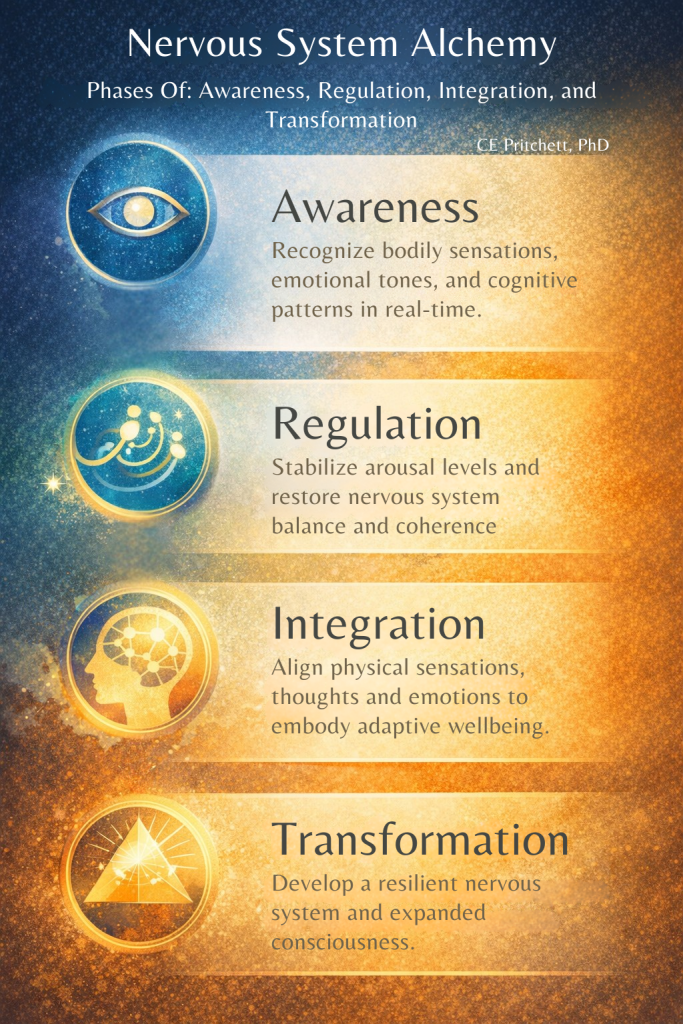
5.1 Phases of Nervous System Alchemy
(Image is property of the author. Please see and reference this article at the end of this article.)
5c. State-Shifts: Coherence, Neuroplasticity, and Lasting Change
Repeated activation of healthy integrated states strengthens coherent functional connectivity between cortical, limbic, and brainstem circuits. This reinforces top-down and bottom-up regulatory pathways, enabling individuals to shift states more rapidly and effortlessly. Over time, baseline autonomic tone becomes more parasympathetically supported, attentional stability increases, and emotional responses become more nuanced and less reactive.
Biologically, this process could be called self-directed neuroplasticity, whereby individuals learn to consciously sculpt their internal neural environment. Such changes extend beyond symptom relief into creativity, relational presence, leadership capacity, and, with time, existential fulfillment (see work by Frankl, Maslow or Jung, along with their respective students). Indeed, this is the biological process in which we create a state of empowerment through awareness, self-responsibility, and thoughtful, intentional action.
5d. Nervous System Alchemy in Practice
Micro-practices embedded within ordinary routines produce cumulative regulatory effects, gradually shifting trait-level patterns of functioning. Thus in various applied settings including clinical, organizational, educational, and personally contemplative, Nervous System Alchemy can offer a responsive framework to cultivate:
- Stress resilience and burnout prevention
- Emotional regulation and relational intelligence
- Cognitive clarity, focus, and creative problem-solving
- Somatic awareness and embodied presence
- Meaning, purpose, and values-based leadership
The process is intentionally designed to be science-based, yet brief, accessible, and adaptable to allow for integration into daily life rather than requiring withdrawal. Importantly, it is founded on a state of nervous system regulation—allowing for an empowered, intuitive, and individually -driven experience (see recent work by: Kotler et al., 2025; Adinolfi & Loia, 2022; McCraty & Zayas, 2014; as well as previous theories of Jung, Frankl, and Maslow).
6. From Survival to Self-Actualization
At its deepest level, Nervous System Alchemy supports a shift from survival-based nervous system organization toward states of self-realization, self-actualization and, if desired, self-transcendence. By moving beyond chronic threat responses, we gain access to higher-order capacities including complex reasoning, deep thoughtfulness, compassion, intuition, creativity, and wisdom.
This expanded range of functioning enables not only personal healing and wellbeing, but also the emergence of legacy-oriented purpose—a desire to contribute meaningfully to collective flourishing.
An overview of the Nervous System Alchemy process can be noted in the Key Principles of:
- Energy Integration: Thoughts, emotions, and bodily states arise from dynamic electrochemical processes; awareness of this interplay fosters calm and vitality.
- Reciprocal Intelligence: Body, mind, and emotion influence one another continuously—a focused mind regulates the body, while an attuned body stabilizes emotion.
- Self-Regulation: With awareness and practice, individuals can consciously shift internal states and restore equilibrium.
6a. Why “Alchemy”
The term alchemy is intentionally used within this model, as both metaphor and as an integrative symbol bridging ancient wisdom traditions and contemporary neuroscience.
Historically, alchemy described the transformation of base materials into more noble and refined forms. This is a process that, in many lineages, is also understood as an inner path of psychological, energetic, and spiritual refinement as much as a physical one1. In this sense, alchemy represents the disciplined cultivation of awareness, coherence, and transformation across multiple levels of being.
Within Nervous System Alchemy, the “base materials” are our conditioned stress responses, fragmented attention, and unconsciously conditioned emotional patterns. Through structured awareness, regulation, and integration practices, these raw elements are progressively refined into clarity, vitality, emotional neutrality, compassion, creativity, and meaning. This reflects a fundamentally neuroplastic process: repeated experience reshapes neural architecture, transforming both perception and capacity.
Thus, alchemy captures the essence of this work: streamlined movement away from merely coping to regulating and optimizing life by transmuting one’s internal landscape. Alchemy refers to the developmental arc that extends beyond symptom reduction and performance enhancement toward conscious evolution, self-actualization, and ultimately, contribution in service to collective wellbeing through creating an authentic legacy.
6b. Why “Intelligence”
The term intelligence is traditionally reserved for cognitive ability—our capacity to reason, analyze, refine, and solve problems. Yet modern neuroscience, psychology, and physiology increasingly demonstrate that intelligence is not confined to the brain, mind, or cognition alone (e.g. Dweck & Yeager, 2019; McMillen & Levin, 2024). Rather, it is distributed across interconnected systems within the human organism, including experiences of the physical body, repeated mental activity, and emotional regulation networks. As science goes deeper, it seems all three of these possess its own form of perception, processing, learning, and adaptive responsivity.
When these systems operate in isolation or imbalance they typically generate fragmented functioning. The body may carry chronic tension or fatigue leading to pain or illness, the mind may constantly overanalyze, and the emotional system may become hyperreactive or suppressed. This fragmentation can manifest as stress, pain, burnout, anxiety, poor physical or mental health, disconnection, indecision, or a persistent sense of being “stuck.” In such states, each system is working hard, yet collectively they struggle to thrive.
By contrast, when the physical, mental, and emotional systems communicate fluidly through an integrated analysis–reaction loop, they generate what can be described as emergent intelligence—a synergistic capacity of iterative adaptation leading to outcomes exceeding the sum of its parts. In this state, perception becomes clearer, responses become more adaptive, and behaviors align more naturally with intention and values. Rather than reacting from fear, habit, or overload, individuals can choose to respond with presence, discernment, creativity, and resilience .
Illustrative Idea: Someone feels a chronic emptiness despite outwardly successful, numbing with work or entertainment to avoid the uncomfortable feelings. Understanding and working with the three intelligences within guides them to use their physical sensations, thoughts and emotions as information. This allows them to explore what truly matters and align daily choices with a deeper sense of purpose rather than external achievement alone.
This emergent intelligence arises from coherent signaling across neural networks, hormonal systems, interoceptive feedback loops, and attentional processes. The body provides moment-to-moment sensory data, the emotional system assigns meaning and motivational salience, and the cognitive system integrates, contextualizes, and guides decision-making and behaviors. When these streams of information are aligned, they create a dynamic field of awareness capable of flexible adaptation, learning, and self-regulation across time.
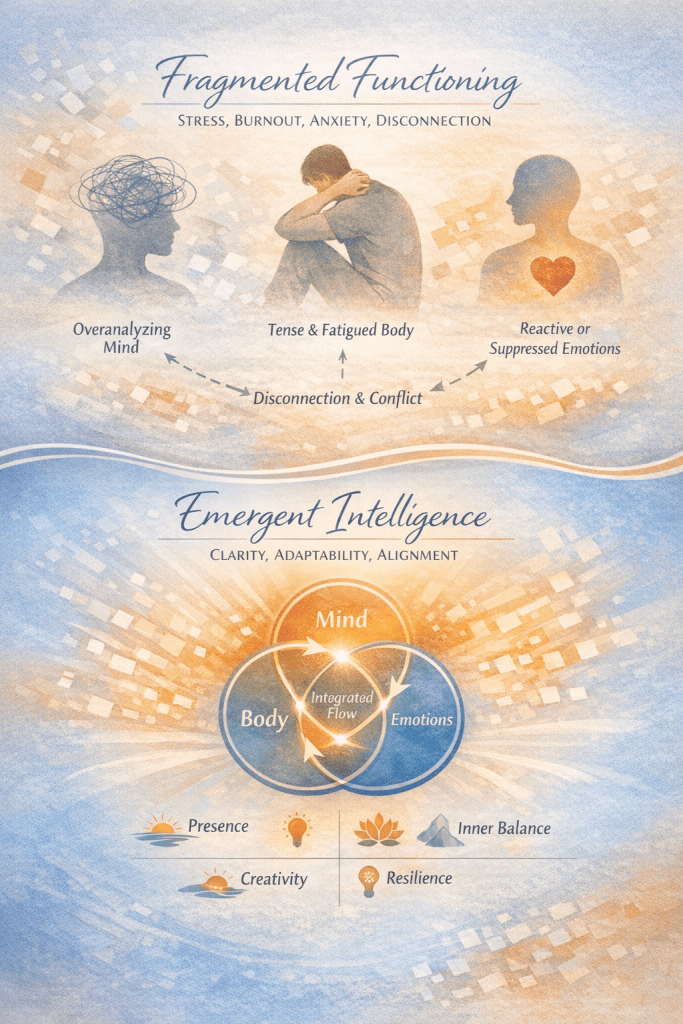
6.1 Nervous Systems Functioning Under Fragmented or Emergent Intelligences
(Image is property of the author. Please see and reference this article at the end of this article.)
Notable References: Dweck & Yeager, 2019; Lindquist et al, 2012; McMillen & Levin, 2024; Saarimäki et al, 2018
6c. Recent (2026 Edition) Statistics
To ground the claim that contemporary, Western‑influenced lifestyles are linked to increased mental health problems:
- The WHO estimates that more than 1 billion people are currently living with mental health conditions, with anxiety and depression highly prevalent and representing a leading cause of long-term disability worldwide (World Health Organization, 2025).
- A 2025 analysis of Global Burden of Disease data shows that the global disability burden from mental disorders has risen substantially over the last three decades, with marked increases in incidence and disability-adjusted life years (DALYs) (Mao et al, 2025).
- A 2025 NIH‑indexed review on “Mental Health and Well-Being in the Modern Era” highlights rapid socioeconomic change, digital dependency, urbanization, economic pressures, and social isolation as key features of contemporary life that are driving increases in depression, anxiety, stress-related conditions, and burnout (Magomedova & Fatima, 2025).
7. Living Summary (2026 Edition)
Through the regulation and integration of one’s Physical, Mental, and Emotional Intelligences, Nervous System Alchemy supports individuals to walk the transformative inner path with greater clarity, so that one may reclaim sovereignty over their nervous system, their attention, and ultimately, their lived experience.
In doing so, we can contribute more meaningfully to the health and happiness of future generations.
For as the Haudenosaunee (French: Iroquois) Seventh Generation Principle2 states: today’s choices should be considered in light of how they will contribute to a healthy world seven generations into the future…
Additional Reading:
1 Ruiz, Don Miguel The Four Agreements Amber-Allen Publishing, 2001.
2 See Indigenous Corporate Training’s 2020 article: What is the Seventh Generation Principle?
Other Section References: Adinolfi & Loia, 2022; Deppermann et al., 2014; Kotler et al., 2025; Magomedova & Fatima, 2025; Malhotra et al., 2017; Mao et al, 2025; McCraty & Zayas, 2014; McCrea, 2010; Sowden, 2025; Verhaeghen & Aikman, 2020; World Health Organization, 2025; Zafeiroudi et al., 2025
Authors Note: This work has not yet undergone peer review and has therefore not been through a formal editorial process. As such, some typographical, grammatical, or referencing (or linking) errors may remain. The author warmly welcomes any feedback or corrections.
Reference this work as:
Pritchett, C.E., (2026). Triple Intelligence (3IQ): A Neuroscience-Based Pathway to BioPsychoEmotional Wellbeing. [White Paper].
Contact: c.pritchett@emeraldcoastresearch.org
References
Adinolfi, P., & Loia, F. (2022). Intuition as Emergence: Bridging Psychology, Philosophy and Organizational Science. Frontiers in psychology, 12, 787428. https://doi.org/10.3389/fpsyg.2021.787428
Albarracín, D., Fayaz-Farkhad, B., & Samayoa, J. A. G. (2024). Determinants of behaviour and their efficacy as targets of behavioural change interventions. Nature reviews psychology, 3(6), 377–392. https://doi.org/10.1038/s44159-024-00305-0
Barbey, A. K., Colom, R., & Grafman, J. (2014). Distributed neural system for emotional intelligence revealed by lesion mapping. Social cognitive and affective neuroscience, 9(3), 265–272. https://doi.org/10.1093/scan/nss124
Bechara, A., & Damasio, A. R. (2005). The somatic marker hypothesis: A neural theory of economic decision. Games and Economic Behavior, 52(2), 336–372. https://doi.org/10.1016/j.geb.2004.06.010
Calderone, A., Latella, D., Impellizzeri, F., de Pasquale, P., Famà, F., Quartarone, A., & Calabrò, R. S. (2024). Neurobiological Changes Induced by Mindfulness and Meditation: A Systematic Review. Biomedicines, 12(11), 2613. https://doi.org/10.3390/biomedicines12112613
Cassilhas, R. C., Tufik, S., & de Mello, M. T. (2016). Physical exercise, neuroplasticity, spatial learning and memory. Cellular and molecular life sciences : CMLS, 73(5), 975–983. https://doi.org/10.1007/s00018-015-2102-0
Craig A. D. (2002). How do you feel? Interoception: the sense of the physiological condition of the body. Nature reviews. Neuroscience, 3(8), 655–666. https://doi.org/10.1038/nrn894
Damasio A. R. (1996). The somatic marker hypothesis and the possible functions of the prefrontal cortex. Philosophical transactions of the Royal Society of London. Series B, Biological sciences, 351(1346), 1413–1420. https://doi.org/10.1098/rstb.1996.0125
Davidson, R. J., & McEwen, B. S. (2012). Social influences on neuroplasticity: stress and interventions to promote well-being. Nature neuroscience, 15(5), 689–695. https://doi.org/10.1038/nn.3093
Deppermann, S., Storchak, H., Fallgatter, A. J., & Ehlis, A. C. (2014). Stress-induced neuroplasticity: (mal)adaptation to adverse life events in patients with PTSD–a critical overview. Neuroscience, 283, 166–177. https://doi.org/10.1016/j.neuroscience.2014.08.037
Doǧru Ç. (2022). A Meta-Analysis of the Relationships Between Emotional Intelligence and Employee Outcomes. Frontiers in psychology, 13, 611348. https://doi.org/10.3389/fpsyg.2022.611348
de Sousa Fernandes, M. S., Ordônio, T. F., Santos, G. C. J., Santos, L. E. R., Calazans, C. T., Gomes, D. A., & Santos, T. M. (2020). Effects of Physical Exercise on Neuroplasticity and Brain Function: A Systematic Review in Human and Animal Studies. Neural plasticity, 2020, 8856621. https://doi.org/10.1155/2020/8856621
Dweck, C. S., & Yeager, D. S. (2019). Mindsets: A View From Two Eras. Perspectives on psychological science : a journal of the Association for Psychological Science, 14(3), 481–496. https://doi.org/10.1177/1745691618804166
Edú-Valsania, S., Laguía, A., & Moriano, J. A. (2022). Burnout: A Review of Theory and Measurement. International journal of environmental research and public health, 19(3), 1780. https://doi.org/10.3390/ijerph19031780
Feldman R. (2020). What is resilience: an affiliative neuroscience approach. World psychiatry : official journal of the World Psychiatric Association (WPA), 19(2), 132–150. https://doi.org/10.1002/wps.20729
Grossmann, I., & Johnson, S. G. B. (2025). Cultivating wisdom through metacognition: A new frontier in decision-making under radical uncertainty. Journal of Applied Research in Memory and Cognition, 14(3), 301–318. https://doi.org/10.1037/mac0000235
Grossmann, I., Oakes, H., & Santos, H. C. (2019). Wise reasoning benefits from emodiversity, irrespective of emotional intensity. Journal of experimental psychology. General, 148(5), 805–823. https://doi.org/10.1037/xge0000543
Gomutbutra, P., Yingchankul, N., Chattipakorn, N., Chattipakorn, S., & Srisurapanont, M. (2020). The Effect of Mindfulness-Based Intervention on Brain-Derived Neurotrophic Factor (BDNF): A Systematic Review and Meta-Analysis of Controlled Trials. Frontiers in psychology, 11, 2209. https://doi.org/10.3389/fpsyg.2020.02209
Gotink, R. A., Meijboom, R., Vernooij, M. W., Smits, M., & Hunink, M. G. (2016). 8-week Mindfulness Based Stress Reduction induces brain changes similar to traditional long-term meditation practice – A systematic review. Brain and cognition, 108, 32–41. https://doi.org/10.1016/j.bandc.2016.07.001
Hölzel, B. K., Carmody, J., Vangel, M., Congleton, C., Yerramsetti, S. M., Gard, T., & Lazar, S. W. (2011). Mindfulness practice leads to increases in regional brain gray matter density. Psychiatry research, 191(1), 36–43. https://doi.org/10.1016/j.pscychresns.2010.08.006
Iacolino, C., Cervellione, B., Isgrò, R., Lombardo, E. M. C., Ferracane, G., Barattucci, M., & Ramaci, T. (2023). The Role of Emotional Intelligence and Metacognition in Teachers’ Stress during Pandemic Remote Working: A Moderated Mediation Model. European journal of investigation in health, psychology and education, 13(1), 81–95. https://doi.org/10.3390/ejihpe13010006
Indigenous Corporate Training, Inc., on the unceded and traditional territory of the SȾÁUTW̱ (Tsawout) First Nation (2020, May 30). What is the Seventh Generation Principle? Indigenous Corporate Training. Retrieved February 11, 2025, from https://www.ictinc.ca/blog/seventh-generation-principle
Innocenti G. M. (2022). Defining neuroplasticity. Handbook of clinical neurology, 184, 3–18. https://doi.org/10.1016/B978-0-12-819410-2.00001-1
Kotler, S., Mannino, M., Friston, K., Buzsáki, G., Kelso, J. A. S., & Dumas, G. (2025). Pathfinding: a neurodynamical account of intuition. Communications biology, 8(1), 1214. https://doi.org/10.1038/s42003-025-08612-9
Leow, Y., Rashid, N. L. B. A., Klainin-Yobas, P., Zhang, Z., & Wu, X. V. (2023). Effectiveness of mindfulness-based interventions on mental, cognitive outcomes and neuroplastic changes in older adults with mild cognitive impairment: A systematic review and meta-analysis. Journal of advanced nursing, 79(12), 4489–4505. https://doi.org/10.1111/jan.15720
Lindquist, K. A., Wager, T. D., Kober, H., Bliss-Moreau, E., & Barrett, L. F. (2012). The brain basis of emotion: a meta-analytic review. The Behavioral and brain sciences, 35(3), 121–143. https://doi.org/10.1017/S0140525X11000446
Malhotra, S., & Sahoo, S. (2017). Rebuilding the brain with psychotherapy. Indian journal of psychiatry, 59(4), 411–419. https://doi.org/10.4103/0019-5545.217299
Magomedova, A., & Fatima, G. (2025). Mental Health and Well-Being in the Modern Era: A Comprehensive Review of Challenges and Interventions. Cureus, 17(1), e77683. https://doi.org/10.7759/cureus.77683
Mao, Q. S., Guo, Y. X., Tian, X. L., Zhao, H. L., & Kong, Y. Z. (2025). Global burden of mental disorders in 204 countries and territories results from the Global Burden of Disease Study 2021. World journal of psychiatry, 15(8), 106887. https://doi.org/10.5498/wjp.v15.i8.106887
Martin, J., Hromyak, A., Sax van der Weyden, M., Weinstein, A. A., & Boolani, A. (2025). The relationship between grit, resilience and physical activity: a systematic review. Frontiers in sports and active living, 7, 1563382. https://doi.org/10.3389/fspor.2025.1563382
McCrea S. M. (2010). Intuition, insight, and the right hemisphere: Emergence of higher sociocognitive functions. Psychology research and behavior management, 3, 1–39. https://doi.org/10.2147/prbm.s7935
McCraty, R., & Zayas, M. (2014). Intuitive Intelligence, Self-regulation, and Lifting Consciousness. Global advances in health and medicine, 3(2), 56–65. https://doi.org/10.7453/gahmj.2014.013
McMillen, P., & Levin, M. (2024). Collective intelligence: A unifying concept for integrating biology across scales and substrates. Communications biology, 7(1), 378. https://doi.org/10.1038/s42003-024-06037-4
Menon, V. (2024). Insular cortex: A hub for saliency, cognitive control, and interoception. Neuroscience & Biobehavioral Reviews. https://doi.org/10.1016/B978-0-12-820480-1.00093-0
Pérez-Peña, M., Notermans, J., Desmedt, O., Van der Gucht, K., & Philippot, P. (2022). Mindfulness-Based Interventions and Body Awareness. Brain sciences, 12(2), 285. https://doi.org/10.3390/brainsci12020285
Pernet, C. R., Belov, N., Delorme, A., & Zammit, A. (2021). Mindfulness related changes in grey matter: a systematic review and meta-analysis. Brain imaging and behavior, 15(5), 2720–2730. https://doi.org/10.1007/s11682-021-00453-4
Pinna, T., & Edwards, D. J. (2020). A Systematic Review of Associations Between Interoception, Vagal Tone, and Emotional Regulation: Potential Applications for Mental Health, Wellbeing, Psychological Flexibility, and Chronic Conditions. Frontiers in psychology, 11, 1792. https://doi.org/10.3389/fpsyg.2020.01792
Pirsoul, T., Parmentier, M., Sovet, L., & Nils, F. (2023). Emotional intelligence and career-related outcomes: A meta-analysis. Human Resource Management Review, 33(3), 100967.
Price, R. B., & Duman, R. (2020). Neuroplasticity in cognitive and psychological mechanisms of depression: an integrative model. Molecular psychiatry, 25(3), 530–543. https://doi.org/10.1038/s41380-019-0615-x ]
Sambol, S., Suleyman, E., & Ball, M. (2025). The roles of ability emotional intelligence in predicting affective decision-making. BMC psychology, 13(1), 503. https://doi.org/10.1186/s40359-025-02779-w
Saarimäki, H., Ejtehadian, L. F., Glerean, E., Jääskeläinen, I. P., Vuilleumier, P., Sams, M., & Nummenmaa, L. (2018). Distributed affective space represents multiple emotion categories across the human brain. Social cognitive and affective neuroscience, 13(5), 471–482. https://doi.org/10.1093/scan/nsy018
Schwartz, J. M., MD, & Begley, S. (2002). The Mind and the Brain: Neuroplasticity and the Power of Mental Force. HarperCollins Publishers. https://doi.org/978-006039355-7
Siegel, D. J. (2020). The developing mind: How relationships and the brain interact to shape who we (3rd ed.). The Guilford Press. https://psycnet.apa.org/record/2020-23051-000
Sowden, W. J. (2025). Wisdom at work: Cultivating perspectival metacognition for adaptive leadership. Journal of Applied Research in Memory and Cognition, 14(3), 319–324. https://doi.org/10.1037/mac0000247
Stover, A. D., Shulkin, J., Lac, A., & Rapp, T. (2024). A meta-analysis of cognitive reappraisal and personal resilience. Clinical psychology review, 110, 102428. https://doi.org/10.1016/j.cpr.2024.102428
Sugawara, A., Terasawa, Y., Katsunuma, R., & Sekiguchi, A. (2020). Effects of interoceptive training on decision making, anxiety, and somatic symptoms. BioPsychoSocial medicine, 14, 7. https://doi.org/10.1186/s13030-020-00179-7
Verhaeghen, P., & Aikman, S. N. (2020). How the mindfulness manifold relates to the five moral foundations, prejudice, and awareness of privilege. Mindfulness, 11(1), 241-254. https://doi.org/10.1007/s12671-019-01243-2
Ueno, D., Ohira, H., & Narumoto, J. (2023). Editorial: Interoception and the autonomic nervous system: Investigating affect, decision-making, and mental health. Frontiers in neuroscience, 16, 1130324. https://doi.org/10.3389/fnins.2022.1130324
Wang, Y., & Cheng, H. (2025). Longitudinal Association Between Mindfulness and Wisdom: A Follow-Up Study in Emerging Adulthood. Journal of Intelligence, 13(9), 122. https://doi.org/10.3390/jintelligence13090122
World Health Organization (2025, September 2). Over a billion people living with mental health conditions – services require urgent scale-up. WHO. Retrieved November 11, 2025, from https://www.who.int/news/item/02-09-2025-over-a-billion-people-living-with-mental-health-conditions-services-require-urgent-scale-up
Yavuz Sercekman M. (2024). Exploring the sustained impact of the Mindfulness-Based Stress Reduction program: a thematic analysis. Frontiers in psychology, 15, 1347336. https://doi.org/10.3389/fpsyg.2024.1347336
Yuan, G. F., Zhong, S., Liu, C., & Guo, Z. (2025). Longitudinal associations among mindfulness, cognitive reappraisal, expressive suppression, non-suicidal self injury, and suicidal ideation among Chinese adolescents. Frontiers in psychiatry, 16, 1632526. https://doi.org/10.3389/fpsyt.2025.1632526
Zafeiroudi, A., Tsartsapakis, I., Trigonis, I., Kouli, O., Goulimaris, D., & Kouthouris, C. (2025). Embodied Mindfulness Through Movement: A Scoping Review of Dance-Based Interventions for Mental Well-Being in Recreational Populations. Healthcare (Basel, Switzerland), 13(17), 2230. https://doi.org/10.3390/healthcare13172230
Zhou, S., Wu, Y., & Xu, X. (2023). Linking Cognitive Reappraisal and Expressive Suppression to Mindfulness: A Three-Level Meta-Analysis. International journal of environmental research and public health, 20(2), 1241. https://doi.org/10.3390/ijerph20021241
 CE Pritchett, PhD